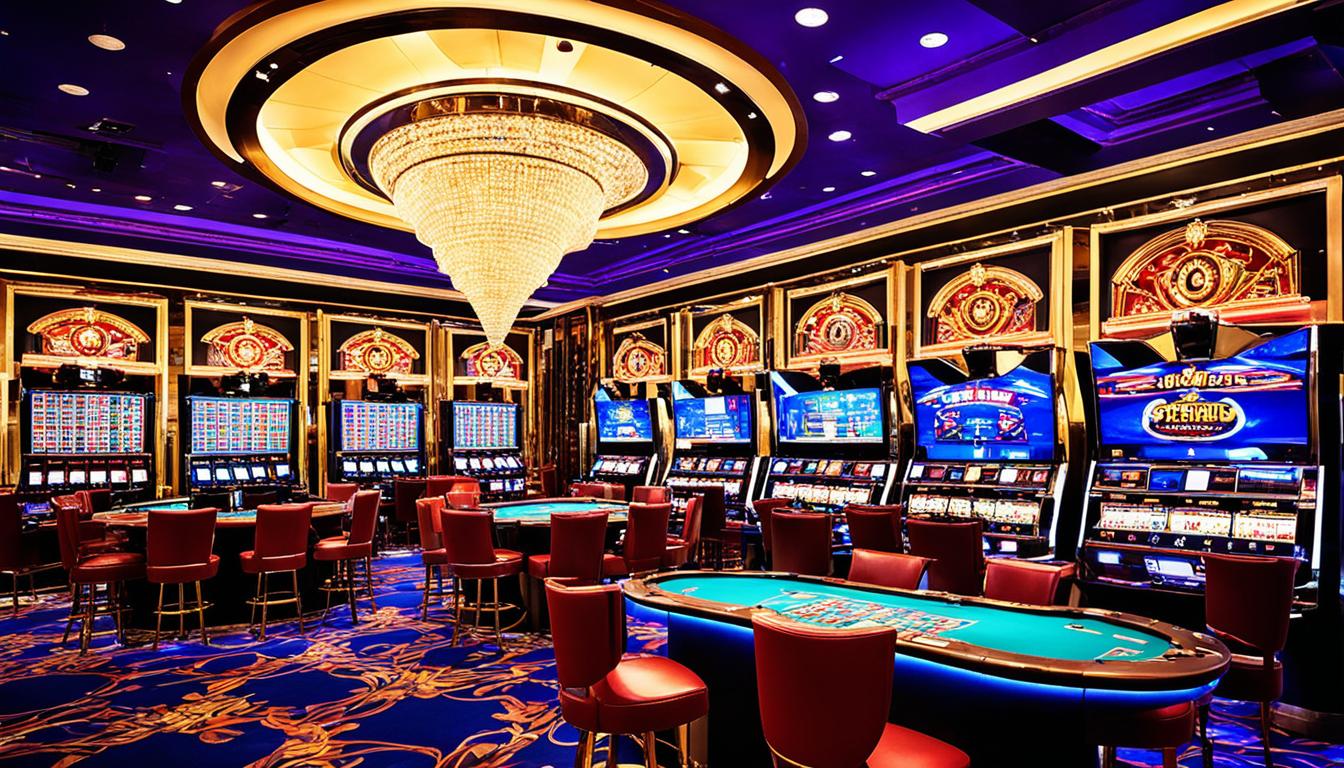
Win Big Now With The Hottest Casino Slots
Surprisingly, the random number generator inside a slot machine cycles through millions of number combinations every second, even when no one is playing. You win when the reels stop and align with a winning payline predetermined by this algorithm, with symbols acting as the visual result of that hidden calculation. The key mechanical benefit is complete unpredictability on every spin, ensuring each pull of the lever or button press offers the same independent chance for a payout as the last.
The Evolution of Reels: From Mechanical to Digital
The transition from mechanical reels to digital reels in casino slots fundamentally shifted player control from physical spinning drums to software-driven outcomes. Early machines used weighted reels with a fixed number of stops, limiting possible symbol combinations. Digital slots replaced this with a random number generator (RNG), allowing virtual reels to map to hundreds of invisible stops per visible position. This purely digital evolution enabled far more complex payline structures and interactive bonus features, while the core **physical spinning reel** illusion was preserved on screen for familiarity. The mechanical constraint of a finite outcome pool was eliminated, giving designers unprecedented flexibility to create engaging, multi-reel layouts without changing the underlying hardware. This power is now inherent to every modern **digital slot reel system**.
How the Liberty Bell Sparked a Global Phenomenon
The Liberty Bell slot machine, invented by Charles Fey in 1898, sparked a global phenomenon by establishing the three-reel mechanical format that became the universal template for casino slots. Its automatic payout mechanism for a winning combination of bells, stars, and horseshoes created instant, tangible rewards, turning a curious contraption into a sought-after attraction. This simple yet addictive design rapidly spread from San Francisco bars to saloons worldwide, proving that a self-contained machine could drive player engagement without attendants. The Liberty Bell didn’t just invent a game; it ignited a mass entertainment movement.
The Liberty Bell’s three-reel structure and automatic payouts created the first globally scalable slot model, transforming a mechanical novelty into a worldwide casino phenomenon.
Key Milestones in Slot Machine Technology
Key milestones in slot machine technology began with the Liberty Bell in 1895, introducing three reels and automatic payouts. The 1960s saw electro-mechanical slots like Money Honey, enabling larger jackpots and side bets. In the 1980s, video slots replaced physical reels with digital displays, allowing for multiple paylines and bonus rounds. Random number generators (RNGs) became standard in the 1990s, ensuring truly independent spin outcomes. The 2010s brought touch-screen interfaces and dynamic reel configurations, such as Megaways, which randomize symbol counts per spin. A clear sequence of advancement:
- Mechanical reel auto-payouts (1895)
- Electro-mechanical action (1964)
- Digital video display (1985)
- RNG-based randomization (1994)
- Megaways variable reels (2016)
Decoding the Symbols: What Those Icons Really Mean
In casino slots, every icon is a coded prompt for your potential payout. The Scatter typically unlocks free spins or bonus rounds by appearing anywhere, regardless of paylines, while the Wild substitutes for standard symbols to complete winning lines. High-value icons, like themed characters or 7s, offer larger rewards but appear less often, whereas lower-value card suits (10, J, Q, K, A) pad the reel with frequent small wins. Don’t overlook the slot’s paytable, as unique bonus symbols—like a Golden Coin triggering a pick-and-win feature—are exclusive to that machine’s internal mechanics. Decoding these symbols lets you read the game’s true volatility and target the specific triggers you need.
Classic Fruits, Bars, and Sevens Explained

Classic Fruits, Bars, and Sevens form the foundational icon set of traditional slots. Cherries, lemons, and plums typically offer low-tier payouts, often paired with specific win conditions like “Cherry-Cherry-Any.” The Bar symbol, derived from the original Bell-Fruit Gum logo, represents a mid-value scatter-like icon that often pays for two or three appearances. The Lucky Number 7, especially in red, is the highest-paying standard symbol, frequently acting as a wild multiplier. Classic fruit slot mechanics rely on these symbols to create predictable paylines and bonus triggers.
Why do Bars often appear in triple forms on reels? The single, double, and triple Bar variants offer ascending payout values, with the triple Bar typically paying at least five times more than a single Bar.
Themed Imagery and Its Impact on Player Engagement
Themed imagery in casino slots directly dictates player engagement by transforming abstract symbols into a narrative experience. Cognitive immersion through visual storytelling lowers the barrier to entry, as recognizable themes (e.g., ancient Egypt, fantasy quests) make icon hierarchies decipherable at a glance. Specific color palettes and animated triggers on themed symbols create anticipation loops, with players scanning for visual cues that signal potential wins. This aligns reward processing with emotional attachment to the theme, increasing dwell time per session as users become invested in the narrative payoff of a collected symbol set.
- Distinct thematic icons reduce cognitive load by linking gameplay goals to known visual archetypes.
- Animated symbol sequences tied to a theme amplify the “near-miss” effect, keeping players engaged through visual tension.
- Progressive unlock of themed elements (e.g., crumbling ruins, rising treasure) builds a discovery loop that re-engages users long-term.
Understanding Payouts: RTP, Volatility, and Hit Frequency
Understanding payouts in casino slots hinges on three core metrics. RTP, or Return to Player, is the theoretical percentage of wagered money a slot returns over millions of spins; a 96% RTP means $96 returned for every $100 bet long-term. Volatility dictates risk: low volatility slots offer frequent, smaller wins to stretch your bankroll, while high volatility slots yield rarer but potentially enormous payouts. Hit frequency describes how often a slot produces any winning combination, from a small payout to a jackpot. A high hit frequency (e.g., 40%) keeps you engaged with constant action, whereas a low frequency means longer dry spells. Selecting a slot requires balancing these factors: pair high RTP with volatility that matches your playing style—low for endurance or high for thrill-chasing—and check the hit frequency to mentally prepare for the pace of rewards.
How Return to Player Percentages Shape Your Sessions
Your slot session is fundamentally defined by the Return to Player percentage (RTP), which dictates the theoretical erosion of your bankroll over time. A 96% RTP slot returns $96 for every $100 wagered in the long run, meaning each spin carries a built-in 4% house edge. This percentage directly impacts session longevity; a 97% RTP slot allows more playtime per dollar than an 88% machine. You experience this as slower or faster depletion of your starting balance, with higher RTPs providing more spins before your funds vanish. How does RTP shape individual sessions?
Does RTP guarantee I won’t lose quickly? No. RTP is a mathematical average over millions of spins, not a per-session promise. A 96% slot can still drain your bankroll in five minutes due to variance, but lower RTPs statistically accelerate that loss.
Low vs. High Volatility: Which Suits Your Playstyle?
Your playstyle decides the volatility that fits you best. Low volatility slots reward you with frequent, smaller wins, keeping your bankroll steady and extending your session—perfect if you want chill, casual spins without big swings. High volatility slots dish out rare but massive payouts, suiting thrill-seekers who can stomach dry spells for the chance at a life-changing hit. Think about your risk tolerance: do you want a slow burn or a volatility-based risk and reward balance? Here’s a quick guide:
- Choose low volatility if you value longer playtime and predictable returns.
- Opt for high volatility if you crave adrenaline and big jackpot potential.
- Mix both session types to match your mood or bankroll size.
- Test free demo modes to see which volatility feels right before betting real cash.
Bonus Features That Keep You Spinning
The real magic of modern slot design is in the bonus features that keep you spinning, not just in matching symbols. I remember a session where I triggered the Sticky Wilds feature—every wild that landed locked in place for three respins, stretching my original five spins into a cascade of new wins. Then came the Expanding Symbols bonus, where a random icon fills an entire reel, often turning a dead spin into a full-screen payout. The best part is the retrigger mechanic within these rounds; hitting extra scatter symbols during the feature resets your free spins count, so you never feel the tension of that final spin. It’s a loop of anticipation.
Each bonus round is a mini-game, engineered to make you feel like you’re always one spin away from the next big trigger.
That tension, built through layered multipliers and guaranteed win-backs, is what keeps the reels turning.
Free Spins, Multipliers, and Wild Symbols Unpacked
Free spins unlock rounds without deducting your balance, often triggered by scatter symbols; multipliers then amplify any wins within that round by a set factor, such as 3x or 5x. Wild symbols substitute for missing payline icons to form winning combinations, and some expanding wilds cover entire reels. When a wild lands during a free spins round with a multiplier active, the combined effect can drastically increase payouts. Stacking wilds and multipliers during these spins creates the highest volatility potential, as each cascade or respin compounds the total win.
Free spins provide the reels, multipliers boost the value, and wild symbols fill the gaps—together they form the core engine of bonus volatility in slots.
Progressive Jackpots: How They Grow and How to Win
A progressive jackpot grows because a small percentage of each player’s wager is added to a central prize pool, which increases until one lucky spin hits the winning combination. To win, you usually must bet the maximum amount and land a specific symbol set or trigger a bonus game. These jackpots can be standalone (tied to one machine) or wide-area (linked across many casinos).
- Always check the paytable to see the exact bet and symbol requirements to qualify for the progressive prize.
- Play only within your budget, as chasing the jackpot often requires max bets.
- Understand that hitting the jackpot is random—there is no guaranteed strategy to force a win.
Strategies for Smarter Play Without Overcomplicating
You settle into your favorite slot, credits loaded, and the reels spin. The real strategy isn’t chasing patterns—it’s knowing that each spin is independent. Smarter play means embracing the volatility rather than fighting it. Instead of trying to “beat” the machine, you pick a game with a volatility that matches your session length and bankroll.
The true hack is setting a hard stop-loss before you even press the spin button, treating every win as a bonus you weren’t guaranteed.
You avoid complex betting systems; instead, you stick to one bet size and walk away after a predetermined number of spins or a win target. This isn’t about outsmarting the RNG—it’s about protecting your experience so the losses don’t overshadow the fun.
Bankroll Management Tips for Extended Sessions
For extended slot sessions, divide your total bankroll into smaller, session-specific stakes. A strict time limit per session prevents chasing losses when fatigue sets in. Use session loss limits: decide your maximum loss before you start and stop play immediately upon hitting it. This protects your bankroll for future days. Also, set a modest win goal; cashing out after doubling your session stake locks in profits and reduces the temptation to gamble them away.

What is the most effective bankroll tip for a six-hour slot session? Pre-loading a small fixed amount, such as 20% of your total day’s budget, into the machine and committing to leave the casino floor entirely if that sum is lost before the session time ends. This prevents ‘feeding’ more cash from your pocket during a losing streak.
When to Walk Away: Recognizing Patterns and Limits
Knowing when to walk away requires recognizing loss patterns like consecutive dead spins and psychological limits such as chasing losses. Set a hard stop-loss before you start—for example, walk after losing 30% of your session bankroll.
- Track your emotional state; frustration signals it’s time to leave.
- Identify repeating near-miss sequences; they often lure you into further play.
- Honor a win target; quitting while ahead locks in gains.
Walking away is not giving up—it’s banking control over your session.
Mobile Gaming and the Rise of Touchscreen Reels
Mobile gaming has transformed casino slots by making the reels a tactile, responsive extension of your hand. Swipe-and-tap mechanics replace physical buttons, allowing you to flick the reels with a finger for precise control over spin speed and stop. Touchscreen reels enhance immersion, as haptic feedback simulates the gritty rotation of a traditional slot drum. Q: How do touchscreen reels improve user engagement? A: They let you drag reels manually, creating an interactive rhythm that feels more personal than a simple tap. This direct manipulation turns each spin into a deliberate action, boosting the sense of agency and satisfaction with every winning combination.
Optimized Interfaces for On-the-Go Thrills
Optimized interfaces for on-the-go thrills prioritize thumb-reachable layouts and portrait orientation, ensuring seamless spin-to-spin transitions without accidental taps. Responsive touchscreen reels employ gesture-based controls for adjusting bet sizes and activating autoplay, minimizing screen clutter. Haptic feedback confirms swipe-to-spin actions, while dynamic button sizing prevents misclicks during commutes. Bright, high-contrast symbols maintain readability under direct sunlight, and instant state changes negate latency common in mobile networks.
Optimized interfaces for on-the-go thrills pair ergonomic touch zones with tactile feedback and glare-resistant visuals, delivering flawless slot sessions in any mobile environment.
Cross-Platform Features That Enhance the Experience
Cross-platform features seamlessly link mobile slots with desktop play through synchronized progress, allowing you to pause a touchscreen reel spin on your phone and resume instantly on your tablet without losing your balance or bonus state. Unified progress tracking ensures your achievements, free spins, and loyalty points remain consistent across devices. Cloud-based save states eliminate the frustration of restarting a feature round, while profile-linked settings let you carry preferred reel speeds or audio themes between platforms. This fluid continuity transforms your gaming session into a persistent, device-agnostic experience, ensuring every touchscreen tap builds toward the same reward pool regardless of where you play.
The Psychology Behind the Spin
The psychology behind the spin leverages variable ratio reinforcement, the same principle that makes a slot’s reward unpredictable and addictive. Near-misses, where two matching symbols land just off the payline, trigger the brain’s reward centers almost as strongly as a win, compelling players to keep spinning in pursuit of that elusive jackpot. The illusion of control, through features like “stop spin” buttons, further fuels engagement, even though outcomes are purely random. Understanding these mental traps is crucial for maintaining discipline; recognizing that the machine is designed to exploit your brain’s anticipation can help you set firm loss limits before you ever push the button.
Near-Misses, Sound Design, and Reward Loops
Near-misses, sound design, and reward loops form a unified psychological trap in slot design. The near-miss—two matching symbols with the third just off—triggers the brain’s reward circuitry almost identically to a win, reinforcing play. Sound design layers in micro-rewards: celebratory chimes on near-misses condition the player to interpret failure as progress. This primes the reward loop, a dopamine-driven cycle where unpredictable wins and their auditory cues keep the player spinning, overriding rational loss assessment.
| Element | Psychological Function |
|---|---|
| Near-Miss | Mimics win to sustain engagement |
| Sound Design | Rewards near-loss events with celebratory audio |
| Reward Loop | Dopamine reinforcement via variable-ratio scheduling |
How Visual Flow Keeps Players Engaged
Visual flow directs the player’s gaze along a calculated path, from the spinning reels to the expanding payout table, then to the celebratory animations. This seamless eye movement prevents cognitive friction, letting the brain focus on anticipation rather than navigation. A well-designed flow uses dynamic reel motion and cascading symbols to create a continuous, hypnotic rhythm. This rhythm lowers the player’s conscious resistance to the next spin, as the eyes are already tracking the next possible win. The sequence is:
- Reels snap into final position, drawing focus.
- Payline highlights activate, guiding the eye across winning combinations.
- Bonus triggers or expanding wilds erupt, redirecting attention to the reward zone.
Each step is a deliberate visual hand-off, maintaining engagement.
Licensing and Regulation: What to Look For
When choosing casino slots, the first factor in licensing and regulation is verifying the regulatory body displayed at the site’s footer. Look specifically for authorities like the UK Gambling Commission or Malta Gaming Authority, as they enforce strict fairness audits on slot RNGs. A license from a top-tier jurisdiction ensures the slot’s payout percentage is independently verified. Always check the license number and click it to confirm it matches the regulator’s official database. Avoid unlicensed casinos, as their slot games can be manipulated. This simple verification step protects your bankroll and guarantees that every spin is genuinely random and legally compliant.
Trusted Authorities and Fair Play Certifications
When choosing casino slots, trusted authority certifications from bodies like eCOGRA or iTech Labs are your non-negotiable shield. These seals verify that each spin uses a certified Random Number Generator, ensuring outcomes are truly random and not rigged. A fair play certification logo on the game’s info page proves independent auditors have tested the exact slot machine for payout accuracy and integrity. Never play a slot without seeing at least one approved badge; it is the only guarantee your odds are what the developer claims.
Ultimately, Trusted Authorities and Fair Play Certifications transform blind chance into assured, audited randomness—your sole guarantee that every spin is lawfully fair.
Red Flags in Unregulated Platforms
An unregulated platform often exhibits unverifiable payout algorithms, where winnings defy statistical probability. You frequently encounter delayed withdrawals, non-existent customer support, and vague terms hidden in fine print. The most telling sign is a lack of provably fair technology; every spin result is a black box. These sites also resist showing third-party audit certifications for their Random Number Generators. No withdrawal guarantee means your funds can vanish without recourse. If a platform demands excessive personal data for a simple cash-out, that is a definitive red flag.
Emerging Trends to Watch
Skill-based slot features are a key trend, allowing players to influence bonus rounds through mini-games, shifting from pure luck. Gamification layers like loyalty paths and daily quests are emerging, making spins feel like progression. Watch for interactive narrative slots where choices impact storylines and payouts. Cluster pays mechanics are replacing traditional paylines, creating dynamic cascading wins. Finally, multi-screen gameplay lets you play a base game while activating a second, independent reel set for double action.
Skill-Based Elements and Gamification
Modern slots now blend chance with skill-based bonus rounds, letting you aim for higher payouts through quick reflexes or memory puzzles. You might steer a virtual car or tap targets to trigger multipliers, making each spin feel less passive. Gamification layers in progress bars, daily missions, and unlockable themes—so even net losses can earn you cosmetic rewards that boost engagement. This turns pure luck into a mini-game hybrid where your decisions genuinely affect the mini-round outcome.
Skill elements add a dash of control to luck, while gamification keeps you chasing fun milestones between spins.
Virtual Reality and Live Dealer Slot Hybrids
Virtual Reality slots now merge with live dealer feeds, creating a hybrid where players sit at a digital table but pull a 3D lever to trigger a random reel spin from a real studio. The experience follows a clear sequence: first, you don a VR headset to enter a simulated casino best online casinos floor; second, a live croupier deals cards or activates a slot display visible in your headset; third, your instant reel results appear on a floating interface. This fusion replaces solitary screen tapping with shared, embodied interaction. Live dealer slot hybrids leverage this to keep real-time human pace while retaining slot randomness.
Understanding How Modern Slot Machines Actually Work
The Role of Random Number Generators in Spins
Paylines vs. Ways to Win: Key Differences Explained
Key Features That Define a Slot Game’s Appeal
Wilds, Scatters, and Multipliers: What Each Does
Free Spins and Bonus Rounds: How to Trigger Them
How to Choose the Right Slot for Your Play Style